
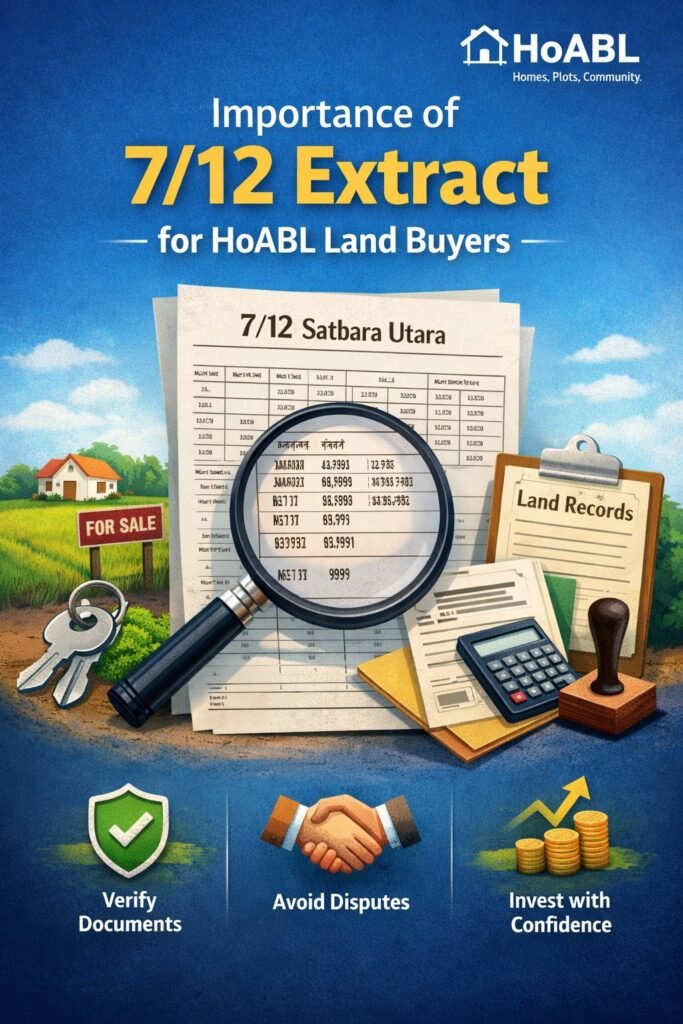
What Is the 7/12 Extract and How Does It Help in Land Ownership? This is one of the most common questions asked by people planning to buy or inherit property in India, especially in states like Maharashtra and Gujarat. The 7/12 Extract plays a key role in verifying land records and helps buyers understand the legal status of a property before taking any major decision.
Whether you are a first-time buyer, a long-term investor, or someone exploring opportunities with HoABL, understanding proper land documentation is essential. Verified records not only protect your investment but also ensure transparency and peace of mind, especially when considering developments in rural and semi-urban areas.
What Is the 7/12 Extract?
The 7/12 Extract, also known as Saat-Baara Utara, is a land revenue document maintained by the state government. It is formed by combining two records: Form 7 and Form 12.
- Form 7 contains ownership details, including the name of the landholder and historical records of previous owners.
- Form 12 maintains information related to crops and land usage.
Together, these forms provide a complete overview of a land parcel. The Revenue Department updates and maintains this document for taxation and administrative purposes.
In Maharashtra and Gujarat, the 7/12 Extract is widely accepted as a primary reference for land-related verification, especially in areas where city survey records are not available.
Information Mentioned in a 7/12 Extract
A standard 7/12 Extract includes several important details:
- Name of the landowner or occupant
- Survey number and sub-division number
- Village and taluka name
- Total land area
- Type of land (agricultural, barren, irrigated, etc.)
- Crop details and cultivation history
- Encumbrances or government-related remarks
- Details of loans or mortgages, if any
This information helps buyers and authorities understand both the legal and physical status of the land.
Why Is the 7/12?
1. Proof of Possession and Rights
The 7/12 Extract reflects who is currently in possession of the land and who has rights over it. While it is not a title deed, it serves as strong supporting evidence in ownership-related matters.
For buyers looking into verified developments like those from HoABL, this document adds an extra layer of confidence.
2. Helps Verify Ownership History
One of the biggest risks in land transactions is unclear ownership. The 7/12 Extract shows past transfers, inheritance details, and succession records. This helps buyers check whether the seller has legal authority to sell the property.
A clear ownership chain reduces the risk of future disputes.
3. Identifies Legal Issues and Encumbrances
This document can reveal:
- Pending court cases
- Government notices
- Land acquisition status
- Mortgages or loans
If any of these appear on the record, it signals potential legal complications. Checking this early helps avoid costly mistakes.
4. Essential for Loans and Registrations
Banks and financial institutions often ask for the 7/12 Extract before approving loans against land. It is also required during registration, mutation, and land conversion processes.
Without this document, many official procedures become difficult.
5. Supports Tax and Revenue Records
The Revenue Department uses the 7/12 Extract to calculate land revenue and maintain taxation records. Keeping it updated ensures that there are no future issues related to government dues.
Is the 7/12 Extract a Title Document?
No. This is one of the most misunderstood aspects.
The 7/12 Extract is not a title deed. It does not legally transfer ownership. It only reflects possession and recorded rights.
To establish full ownership, buyers must also verify:
- Sale deed
- Registration documents
- Encumbrance certificate
- Approval records
- Local authority permissions
Professional developers like House Of Abhinandan Lodha usually ensure that all these documents are in place for their projects, which is why due diligence remains critical even when dealing with reputed brands.
How to Get a 7/12 Extract?
The government has also strengthened land verification through digital land records in India.
With the introduction of digital land records, property owners can now download certified copies of their land documents online through the Mahabhumi portal at a nominal fee of around Rs. 15. These records come with secure digital signatures, scannable QR codes, and unique verification numbers, ensuring authenticity and protection against tampering or forgery. This system has replaced the traditional dependence on physical stamps and manual signatures, making land documentation faster, safer, and more reliable for buyers and investors.
In Maharashtra, for example, it can be obtained through the official land records portal. Users need basic details like:
• District
• Taluka
• Village
• Survey number
Offline copies are also available at local tehsil or land revenue offices for a small fee.
Always make sure you are accessing the latest version, as outdated records may not reflect recent changes.
Importance for Land Buyers and Investors
For people investing in plotted developments or agricultural land, the 7/12 Extract acts as a foundation document.
Before finalizing any deal, especially in semi-urban areas, buyers should:
- Cross-check seller details
- Match survey numbers with site location
- Verify land usage
- Look for legal remarks
- Confirm mutation entries
Investors exploring long-term growth opportunities through structured developments like HoABL Projects benefit from understanding these fundamentals. It helps them make informed decisions instead of relying only on marketing material.
Why Proper Land Records Help Build Trust and Confidence in Property Buying
Understanding land records like the 7/12 Extract shows that a buyer is serious and responsible about property ownership. It reflects careful planning and awareness before making any investment decision.
Experienced buyers know that documents are just as important as location and price. Real estate professionals always advise verifying land records before finalizing any deal. Reputed developers maintain transparent documentation to protect buyers’ interests. When people are informed and cautious, trust naturally develops in the transaction process.
This approach not only safeguards individual investors from legal and financial risks but also strengthens the overall credibility of the real estate market.
Final Thoughts
The 7/12 Extract is one of the most important documents for anyone dealing with land in Maharashtra and Gujarat. It provides insight into ownership, usage, and legal standing, helping buyers avoid disputes and financial losses.
While it does not replace a title deed, it plays a critical supporting role in property verification. Whether you are buying independently or considering branded developments by HoABL, reviewing this document should always be part of your due diligence process.
A well-informed buyer is a protected buyer. Understanding the 7/12 Extract is the first step toward safe and confident land ownership.
“Zameen ko samjho, uski value khud bolne lagegi.”
For more information and trusted real estate opportunities, visit our website at https://hoablindia.com/. You can also contact us directly at +91 7888091619 for expert guidance and support.